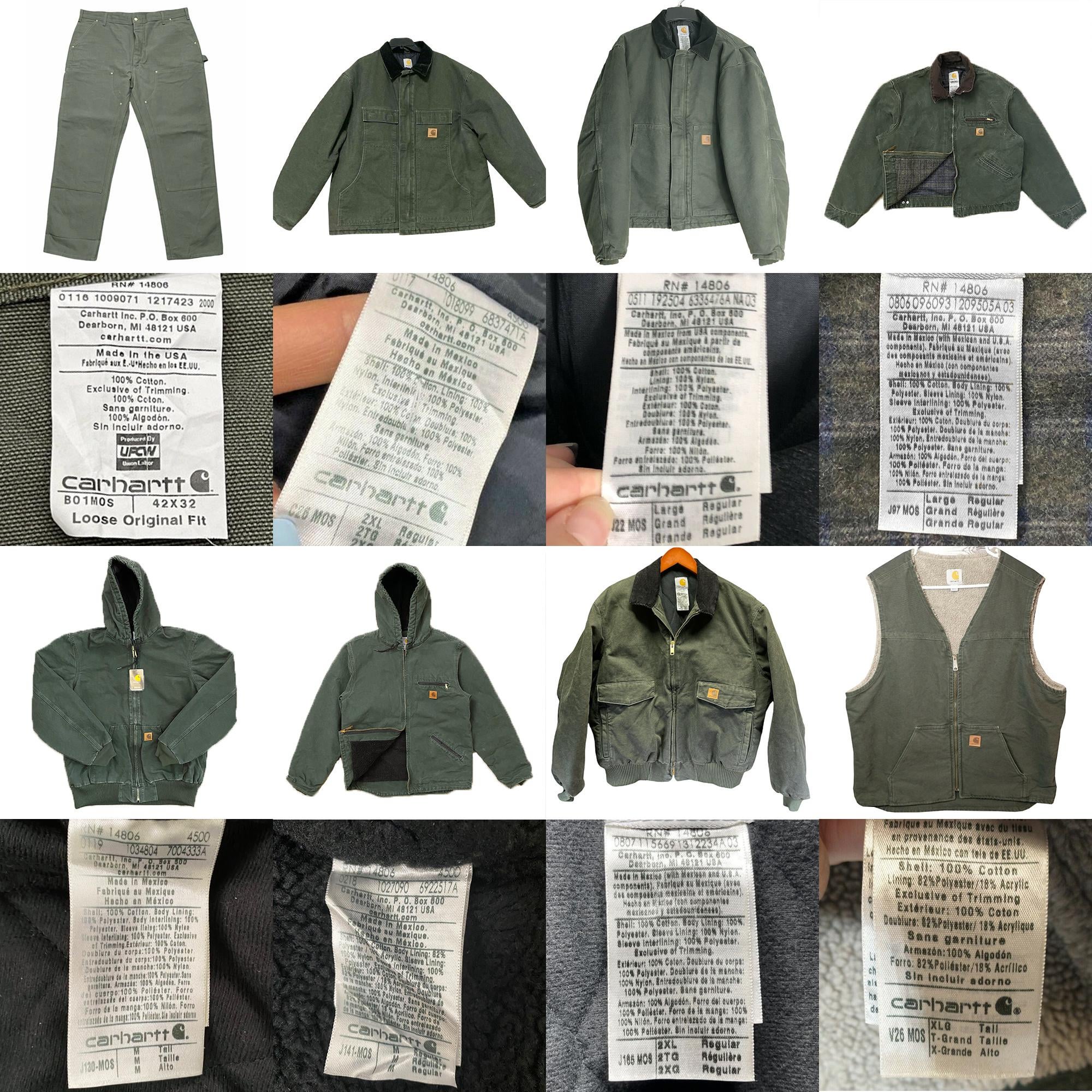
Carhartt has made more than a dozen distinct greens over the decades — and each one is an era marker. This is our field guide to the greens that matter, from the everyday to the one-year rarities. First, a quick primer on the code system that names them, because that's how you'll identify them on a tag (it's also what the letters in our listings mean — like the MOS in our B136 MOS).
FIRST, THE CODE SYSTEM IN 60 SECONDS
Before 1997: colors were numbers baked into the style code. The "6" in 6BLJ means Carhartt Brown. "4" meant Green, "5" Black, "2" Navy.
1997–98 onward: styles got one code, colors became three-letter suffixes. Carhartt Brown = BRN, Black = BLK, Moss = MOS, Darkstone = DST. This is the format on most vintage you'll find — and on most of our listings: our B136 MOS dungarees are Moss sandstone duck, our B73 DST jeans are Darkstone washed denim.
2012 onward: some colors became three digits or letter-number mixes (Carhartt Brown = 211, Navy = I26).
THE GREENS, ONE BY ONE
Now the main event. These are the greens you'll actually encounter hunting vintage, and what each one tells you:
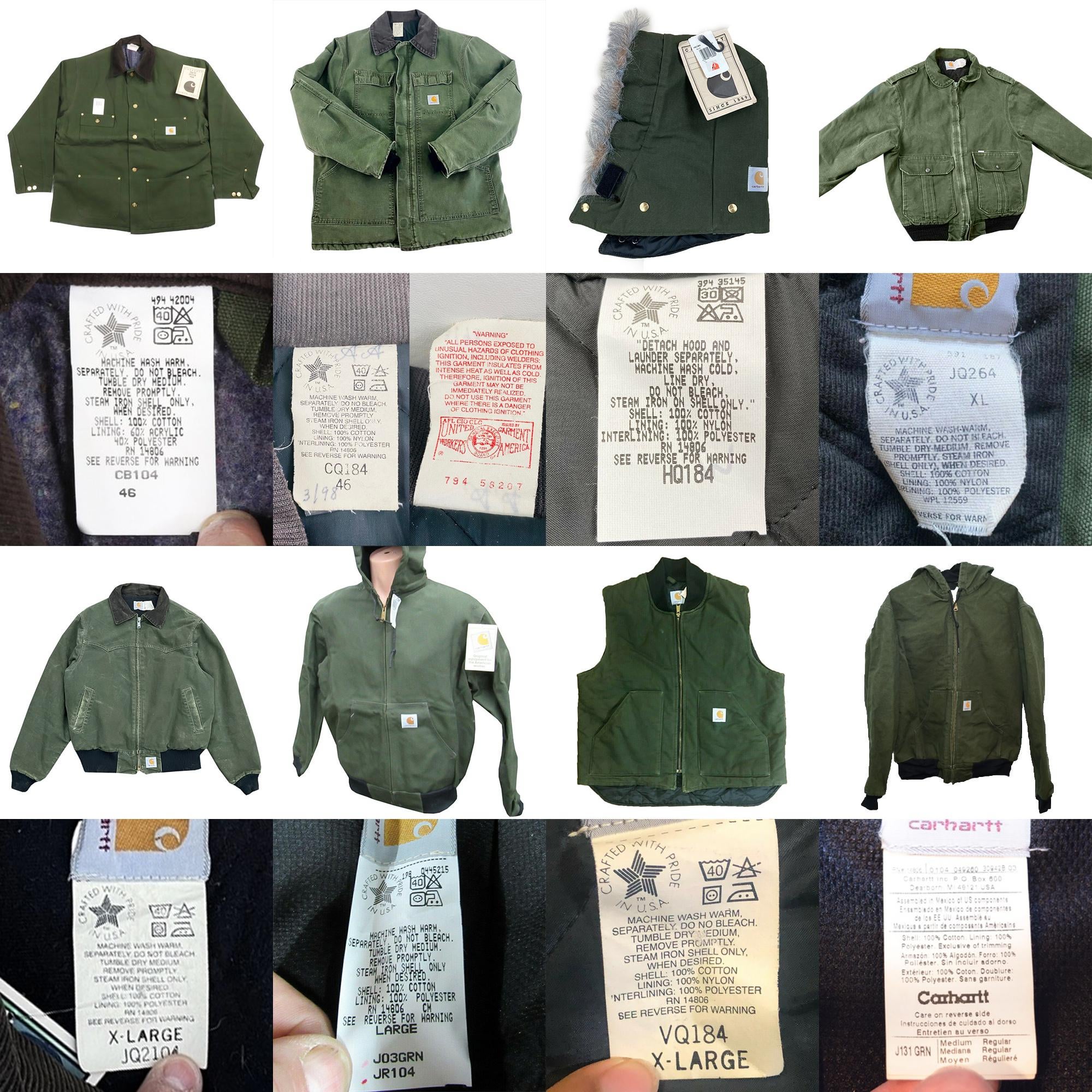
Green (code 4, later GRN) — the first non-camo green, early 1990s, seen on chore coats, Santa Fes, and Active Jackets. (Photo: u/anthonydelillo, r/Carhartt)
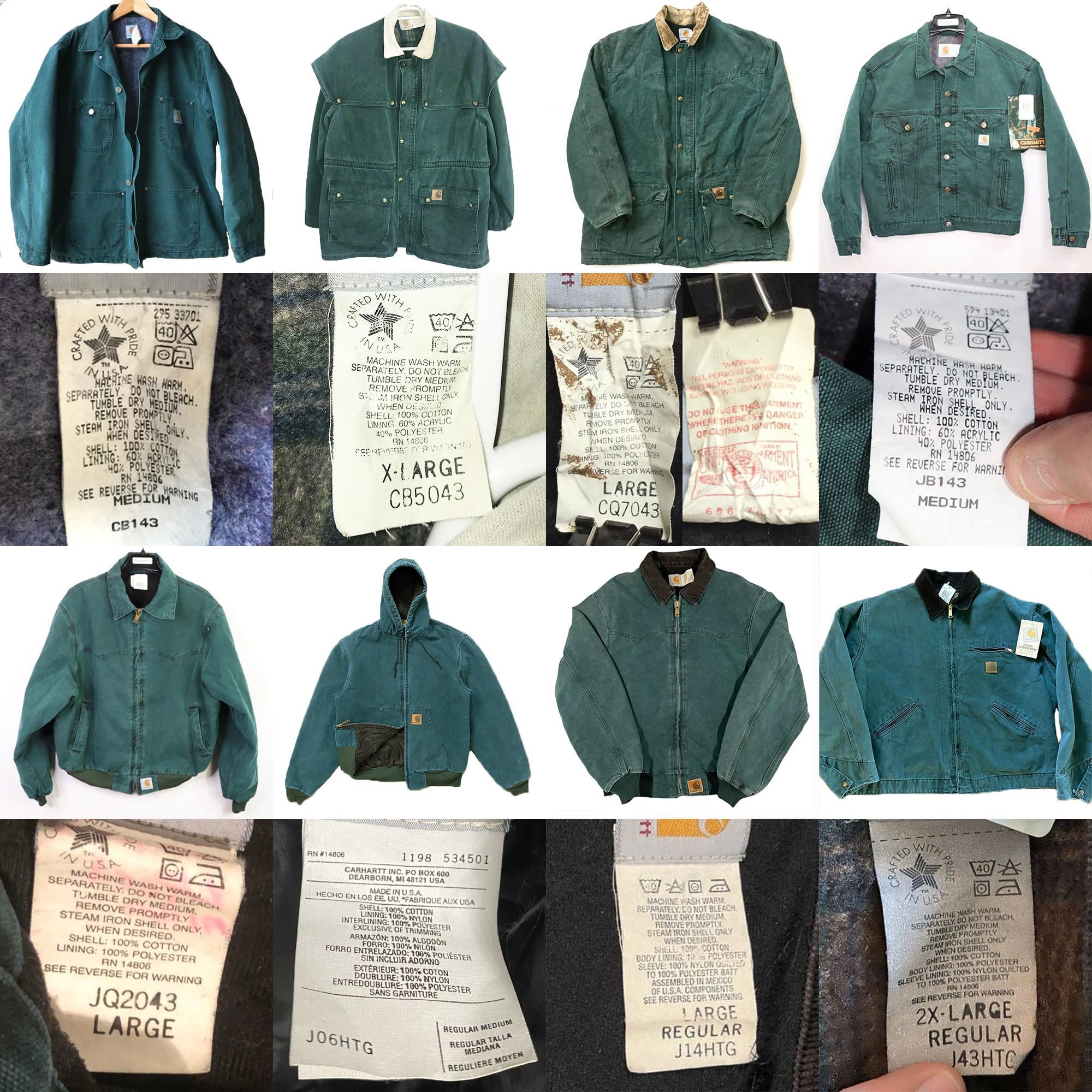
Hunter Green (43, later HTG) — the vibrant blue-green of the Sandstone '90s, introduced 1993. If you see Hunter Green outerwear, think 1993–2000; after that it survived only in shirts and hats. (Photo: u/anthonydelillo, r/Carhartt)
Moss (MOS, later also 316) — the king. The longest-running green and longest-running Sandstone color, from 1998 all the way into current production. Our Moss pieces carry this exact code. (Photo: u/anthonydelillo, r/Carhartt)
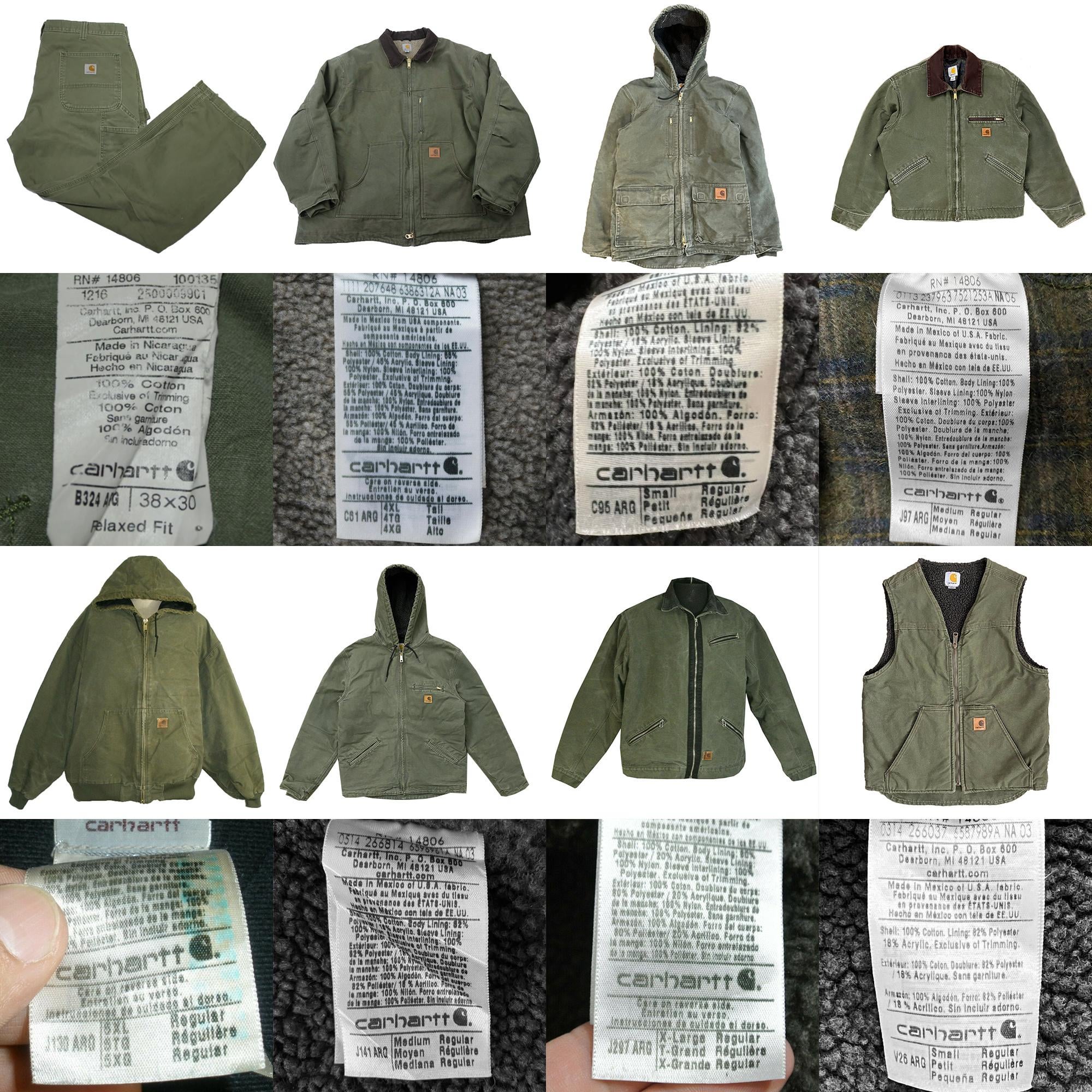
Army Green (33, later ARG) — born 1994 on twill pants, resurrected in the late 2000s on Sandstone jackets. (Photo: u/anthonydelillo, r/Carhartt)
AND THE REST — THE COMPLETE GREENS
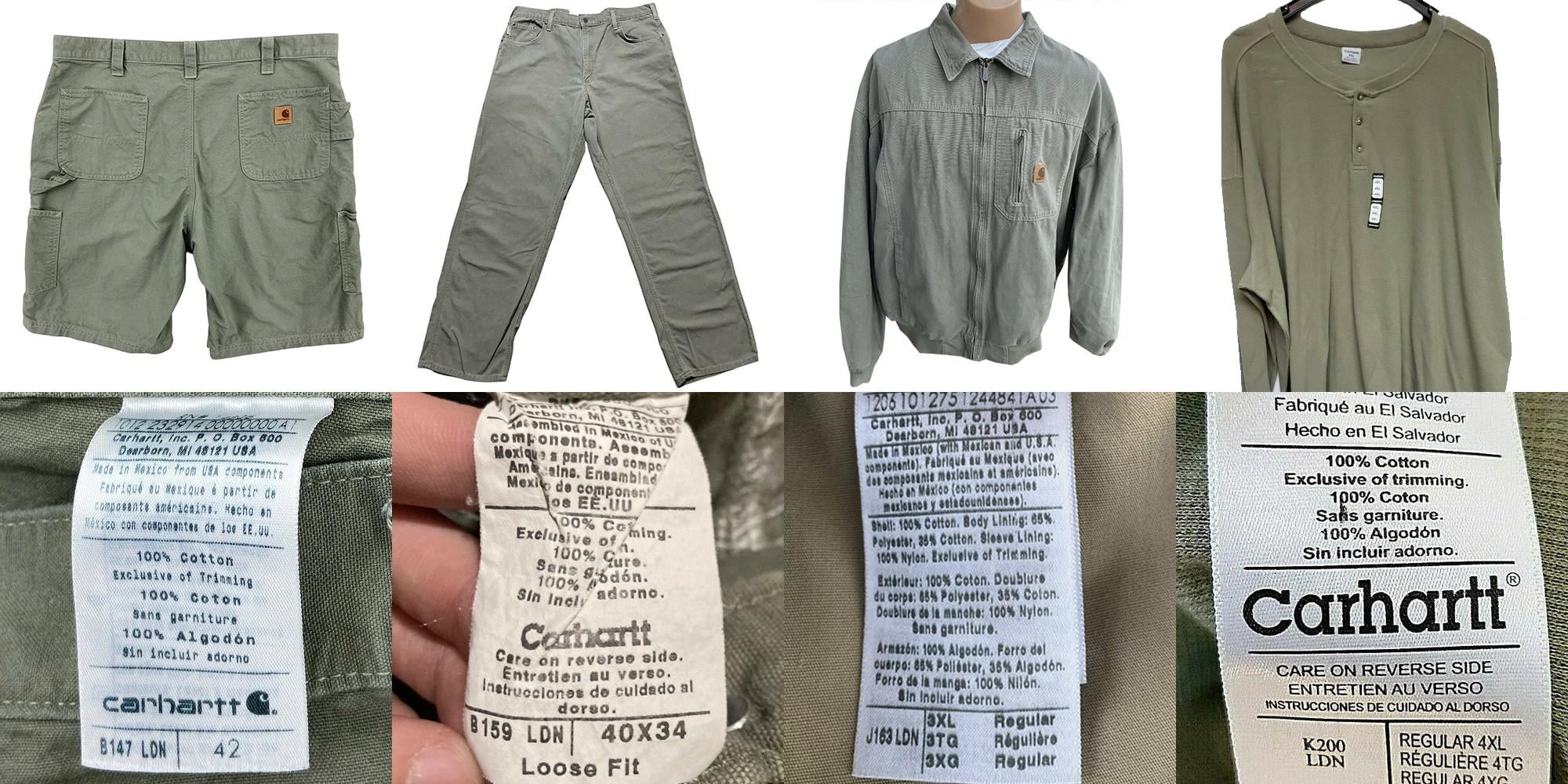
Loden — LDN. Began as a flannel shirt color in the early '90s, came back in the 2000s on canvas styles like the J169 Hamilton Jacket and B159 Carpenter Pant. (Photo: u/anthonydelillo, r/Carhartt)
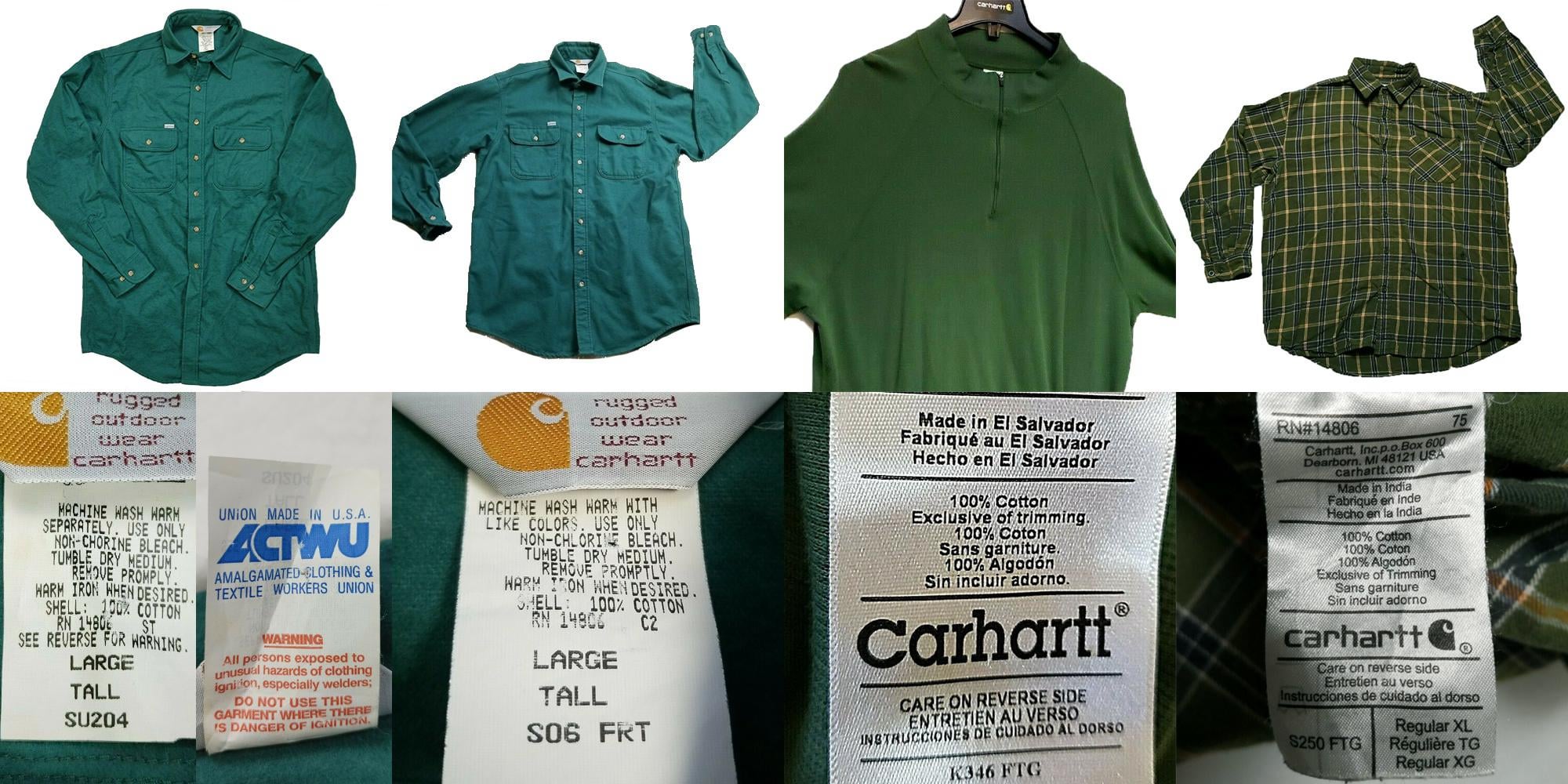
Forest Green — 4, FRT. Two colors wore this name: a blue-green '90s version on shirts and hoodies (sharing code 4 with Green until FRT arrived in 1998), and a truer green in the 2000s on flannels. (Photo: u/anthonydelillo, r/Carhartt)
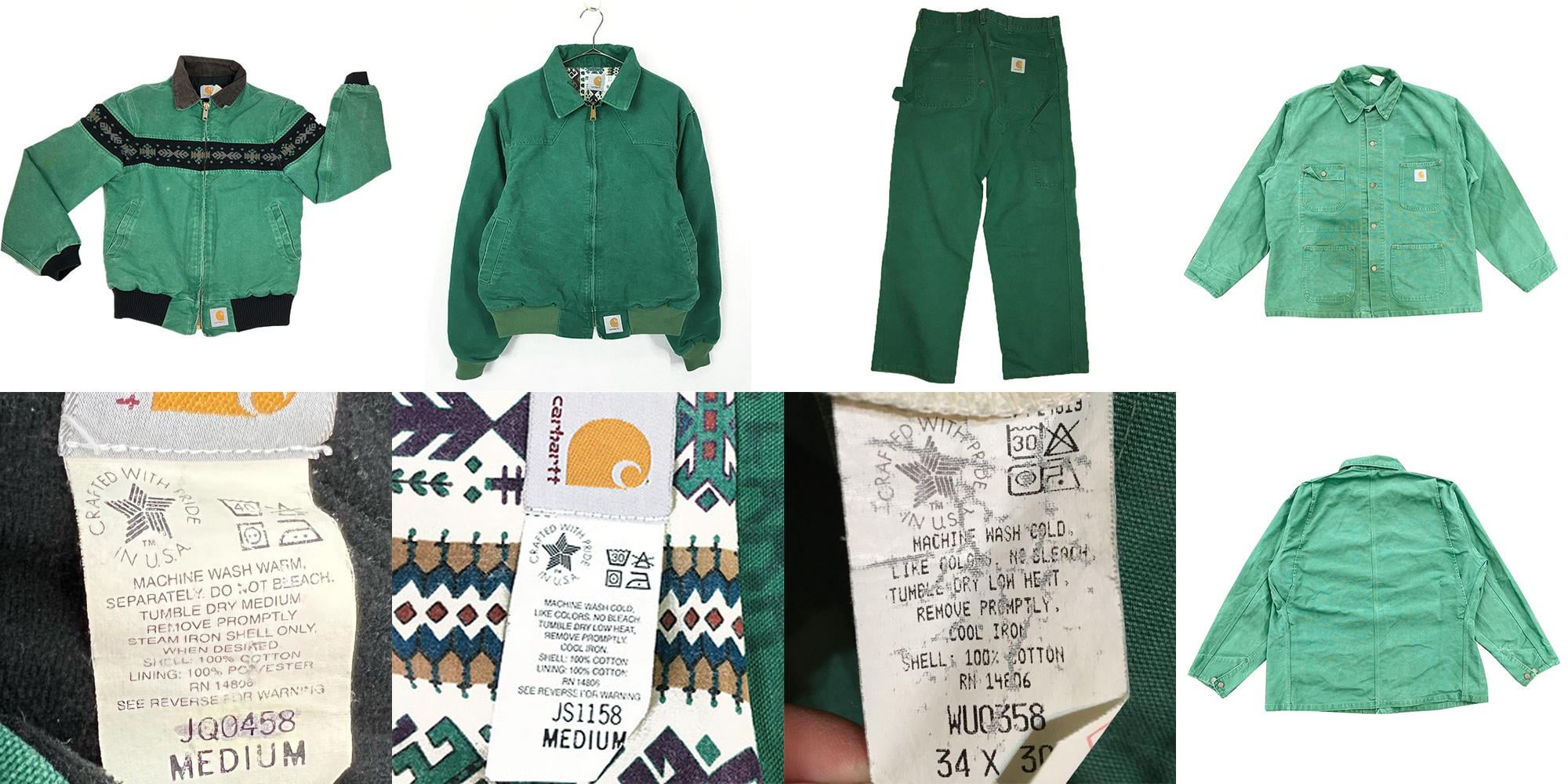
Cactus — 58, CTS. The vibrant green of the 1994 Southwest Collection — Western Jackets, Southwest Jackets, unlined chore coats. Dormant for years, then revived in the 2010s as a shirt color. (Photo: u/anthonydelillo, r/Carhartt)
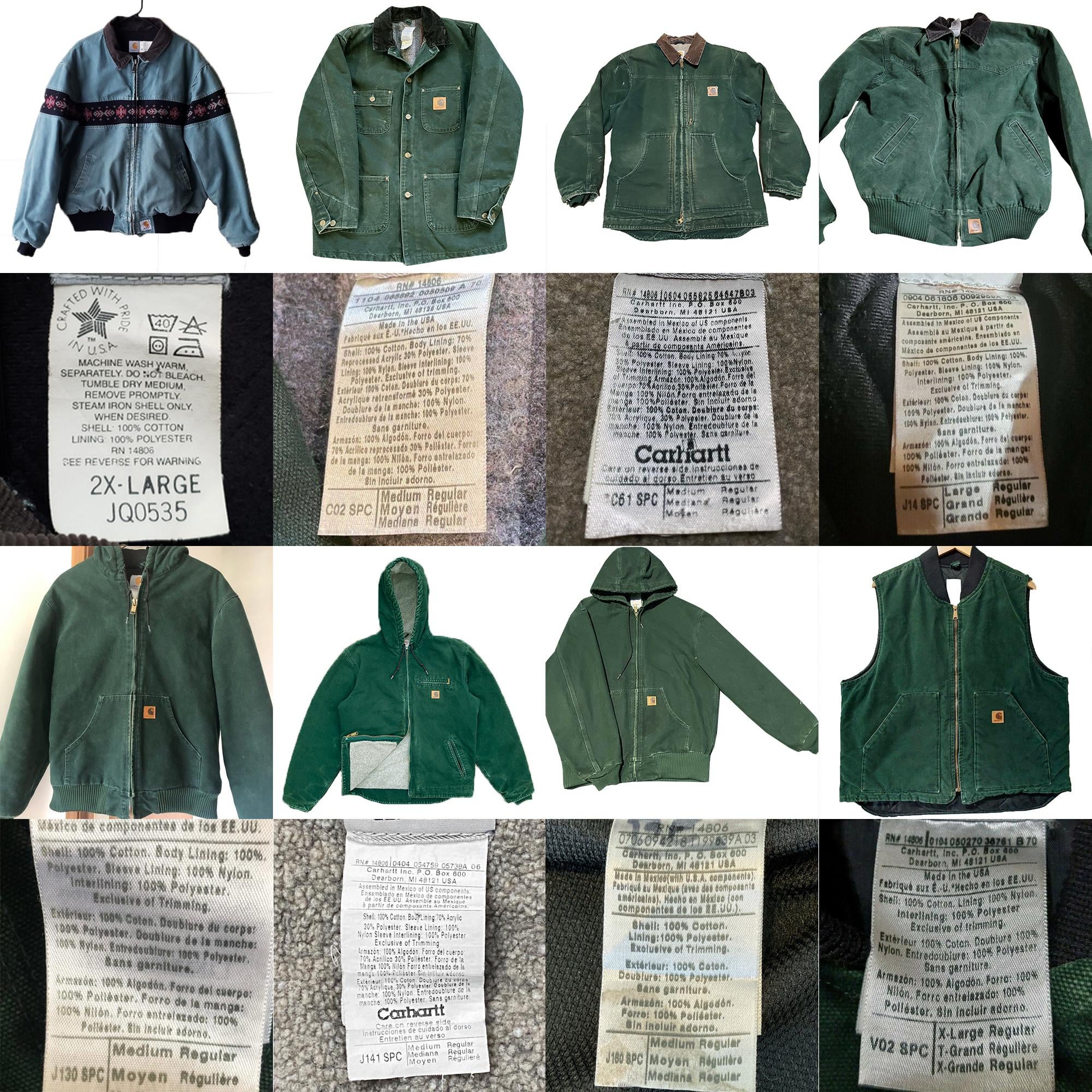
Spruce — 35, SPC. The 1995 Spruce was blue like its namesake tree's needles and lasted barely a year; the 2000s SPC Spruce is a darker, richer green on Sandstone jackets, coats, and vests. (Photo: u/anthonydelillo, r/Carhartt)
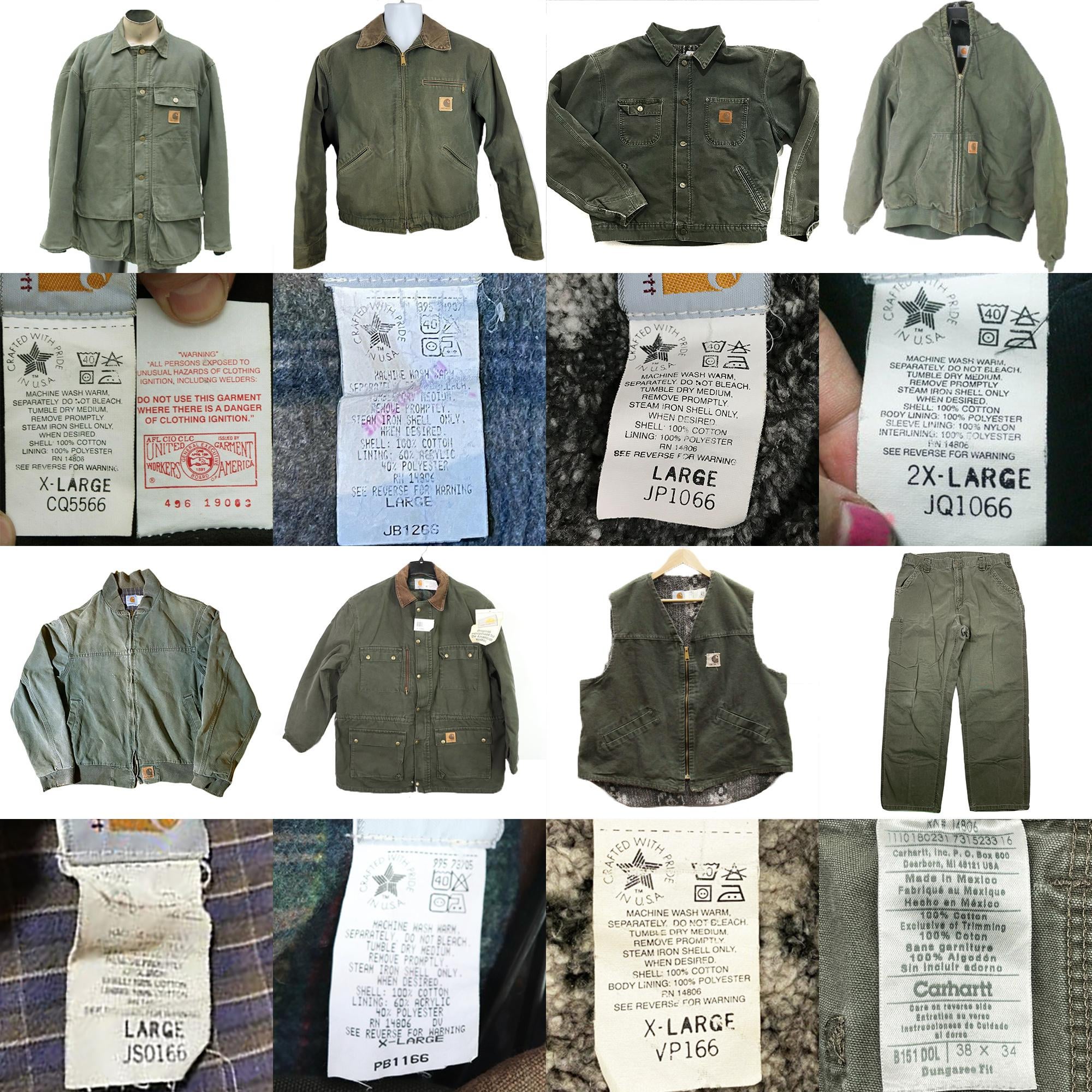
Dark Olive — 66, DOL. A drab washed duck green from 1995 — Detroit Jackets, parkas, then pants, shorts, and chore jackets through 1997. Rare in the 2000s. (Photo: u/anthonydelillo, r/Carhartt)
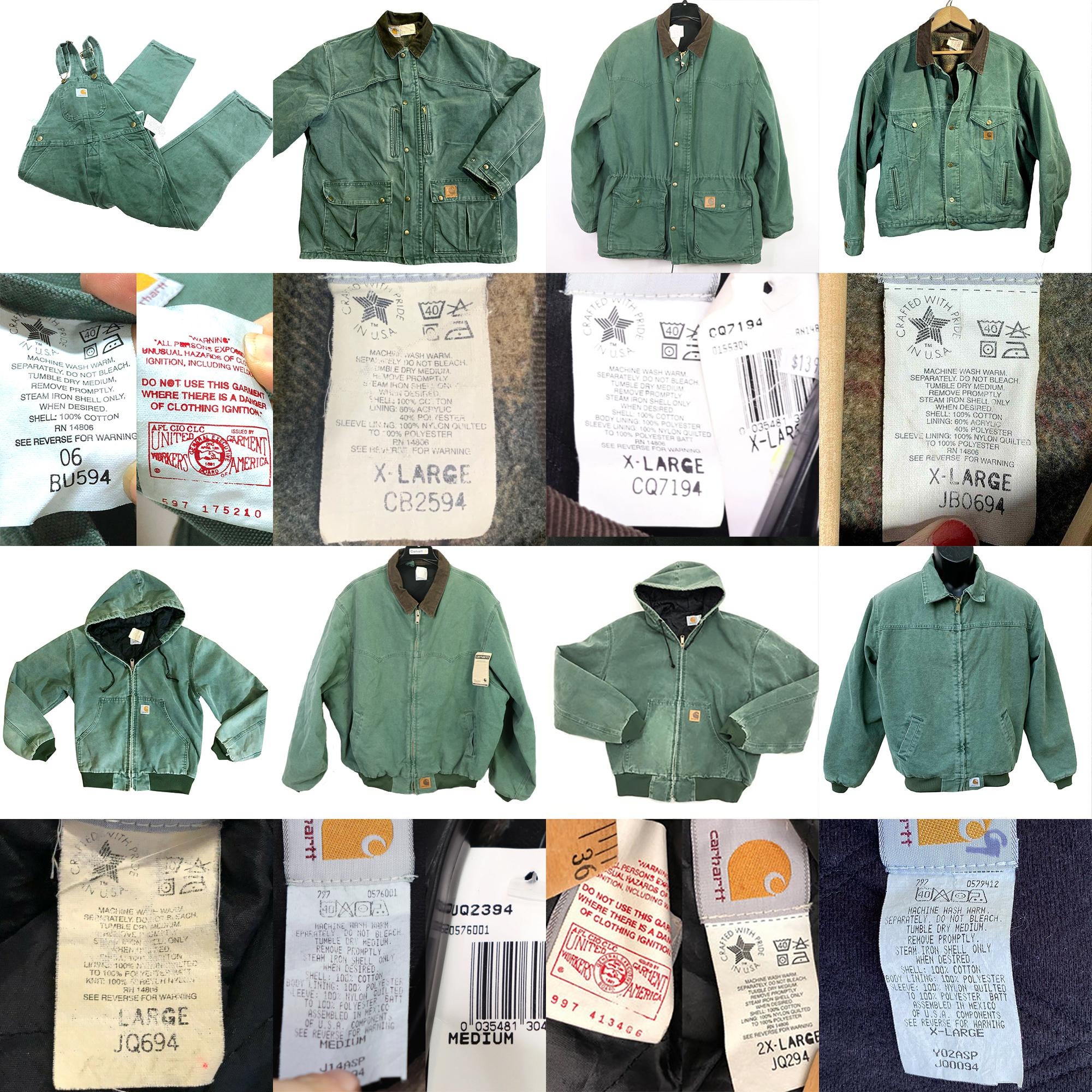
Aspen — 94, ASP. A light green that existed for 1997 only — Santa Fe Jackets, jean jackets, ranch coats. One production year makes it a genuine rarity. (Photo: u/anthonydelillo, r/Carhartt)
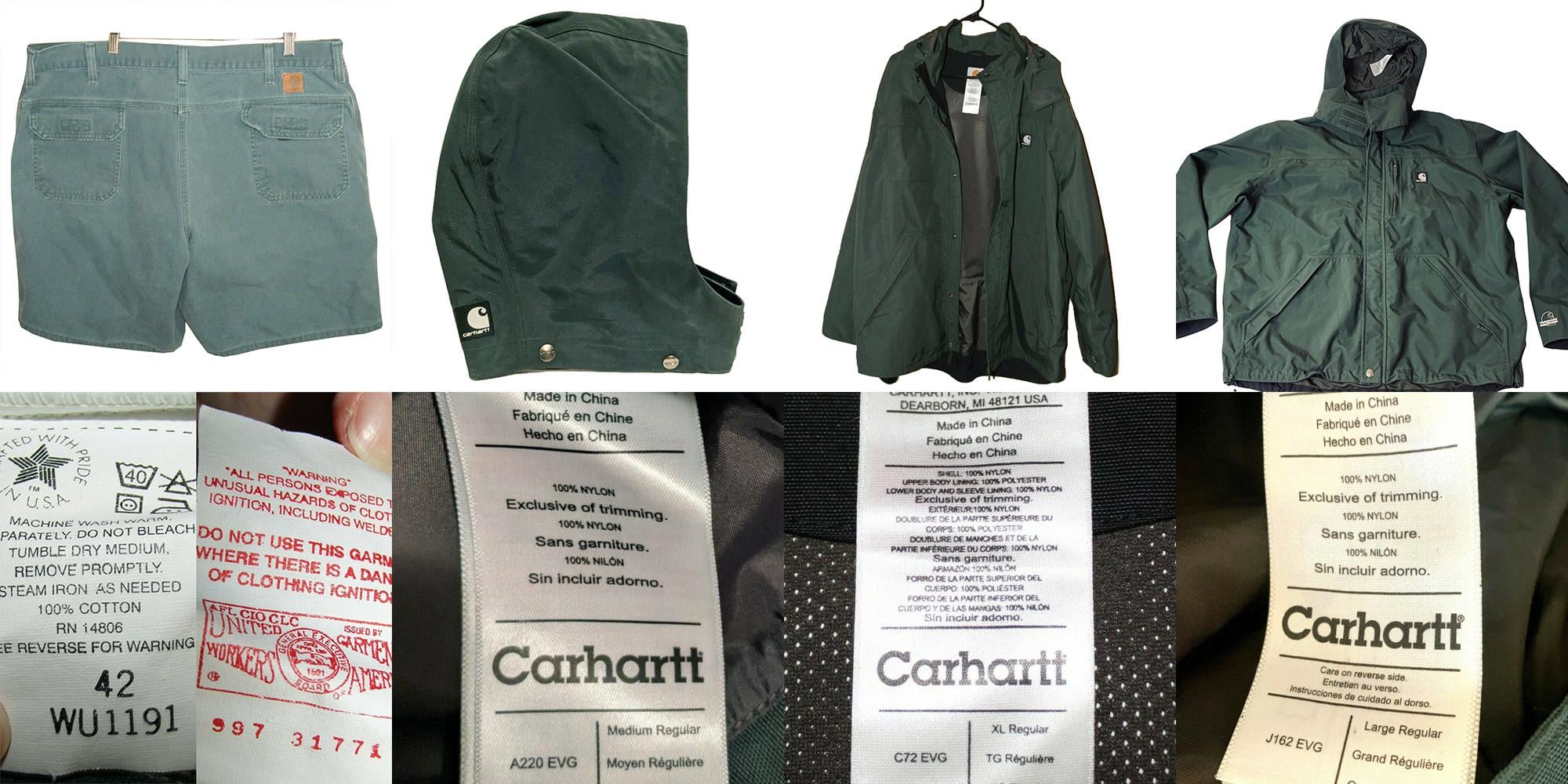
Evergreen — 91, EVG. Dark green from 1997, later a rainwear staple on the Shoreline waterproof jackets and coats. (Photo: u/anthonydelillo, r/Carhartt)
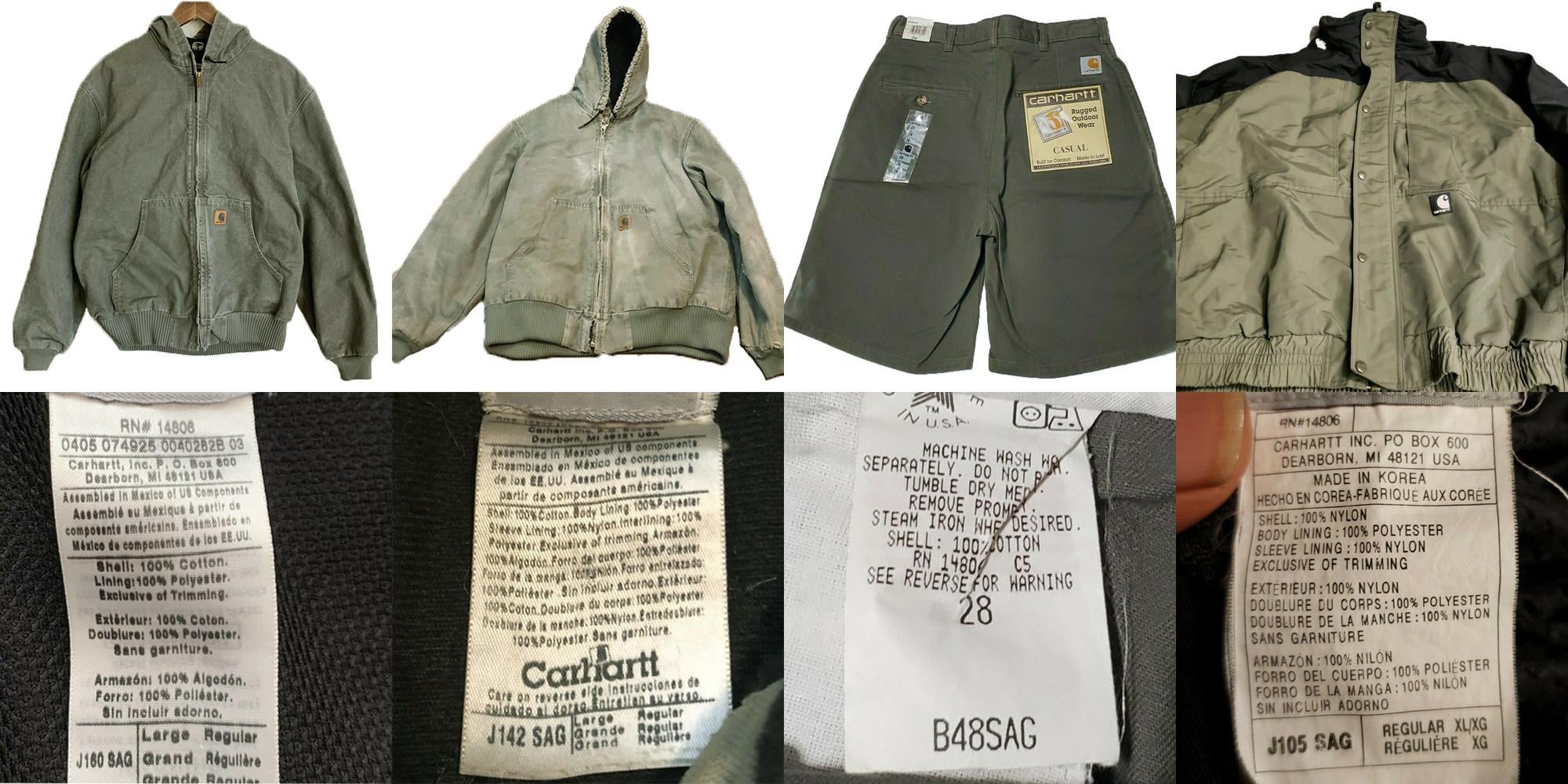
Sage — SAG. A muted 1998 green on shorts, revived in the early 2000s on Active Jackets and the soft-shell Workshield line. (Photo: u/anthonydelillo, r/Carhartt)
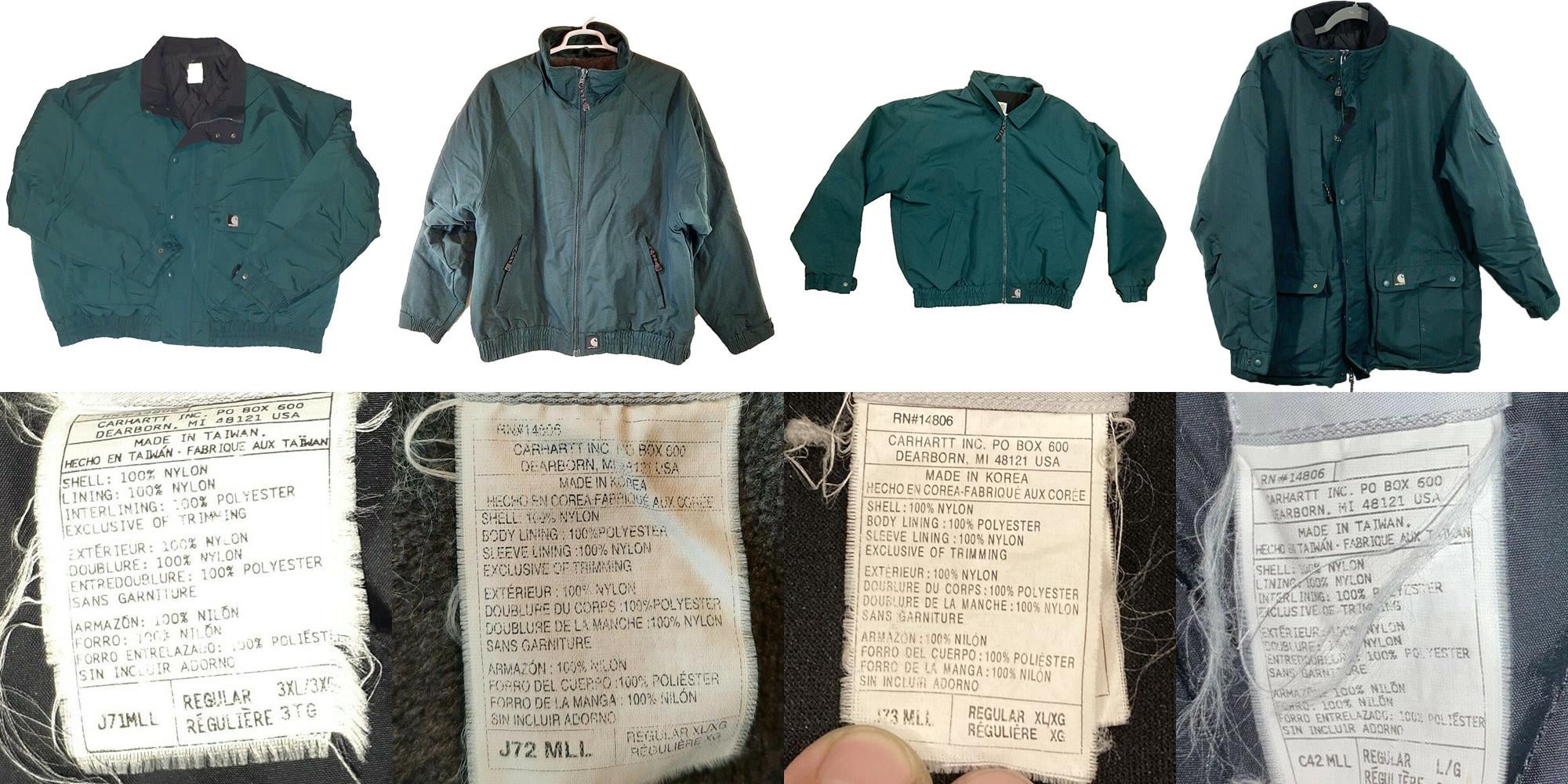
Mallard — MLL. A blue-green used exclusively in the Workshield line of the late '90s and early 2000s. (Photo: u/anthonydelillo, r/Carhartt)
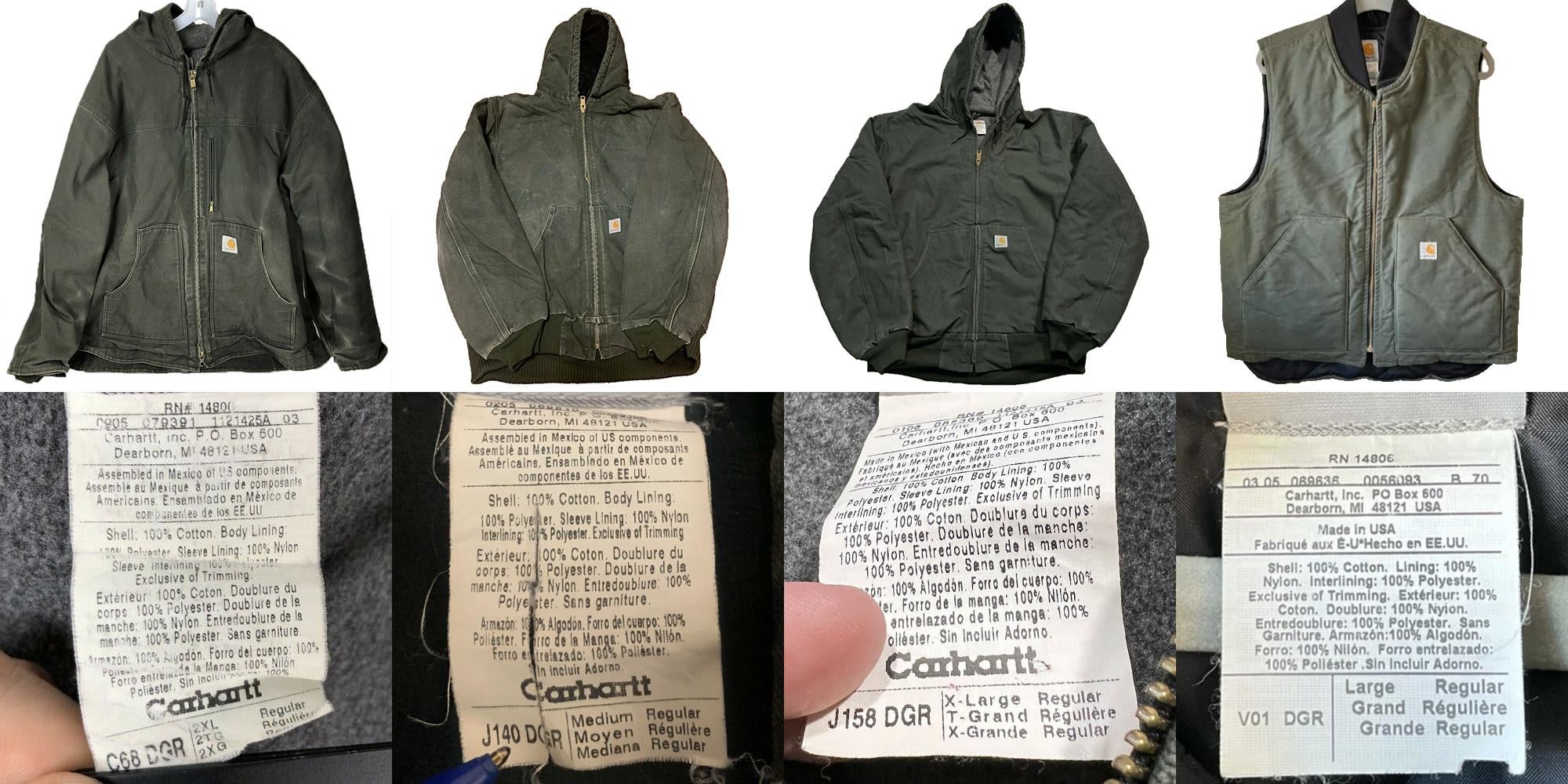
Dark Green — DGR. Well named. A short early-2000s run on firm duck icons like the J140 Active Jacket and V01 Arctic Vest. (Photo: u/anthonydelillo, r/Carhartt)
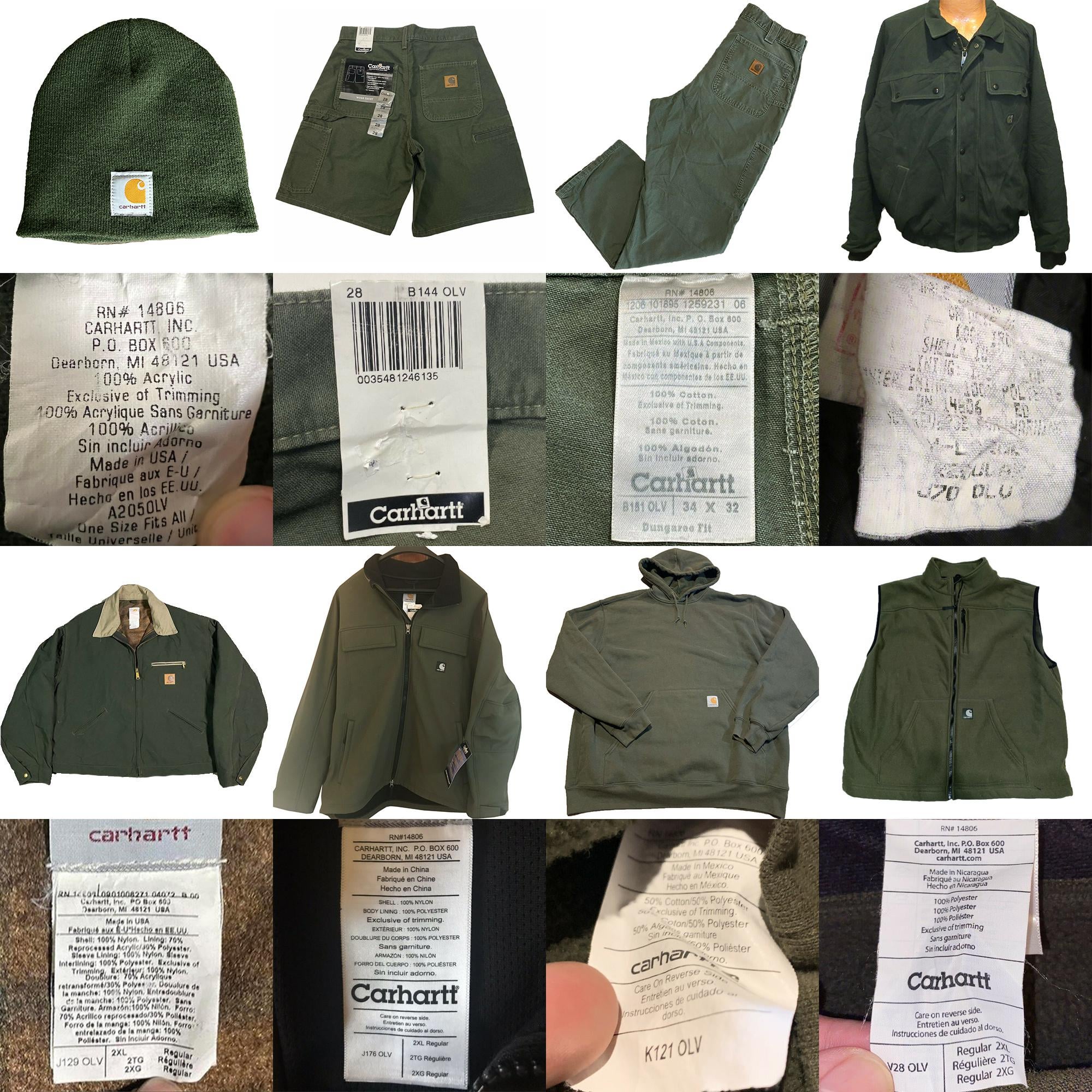
Olive — OLV. Late-'90s, born in the T.A.C. 1000 Cordura line; mostly soft-shells, canvas pants, and shorts — plus the rare J129 Detroit. (Photo: u/anthonydelillo, r/Carhartt)
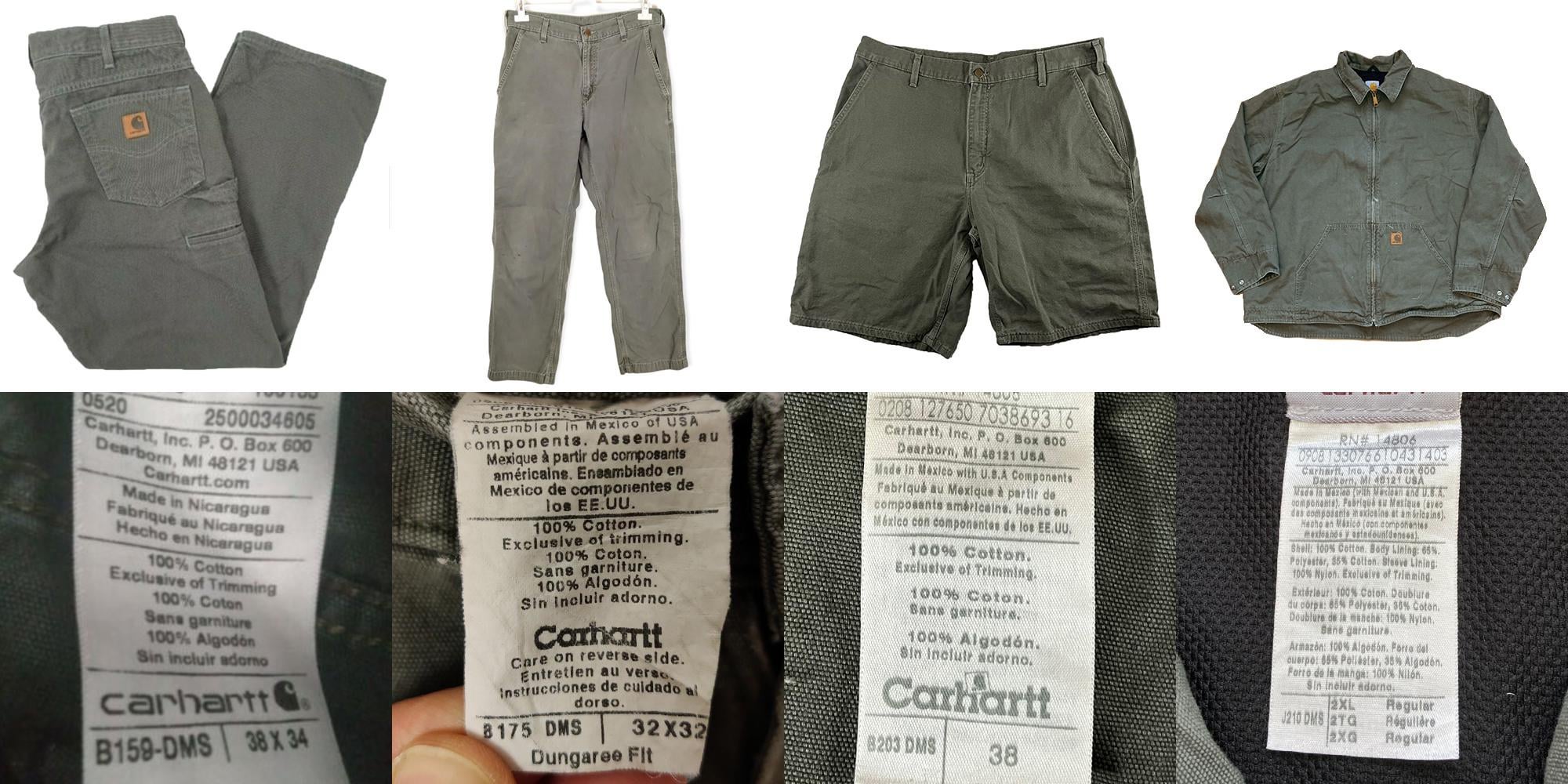
Dark Moss — DMS. Moss's darker sibling, 2000s — the J169 Hamilton Jacket and canvas pants and shorts. (Photo: u/anthonydelillo, r/Carhartt)
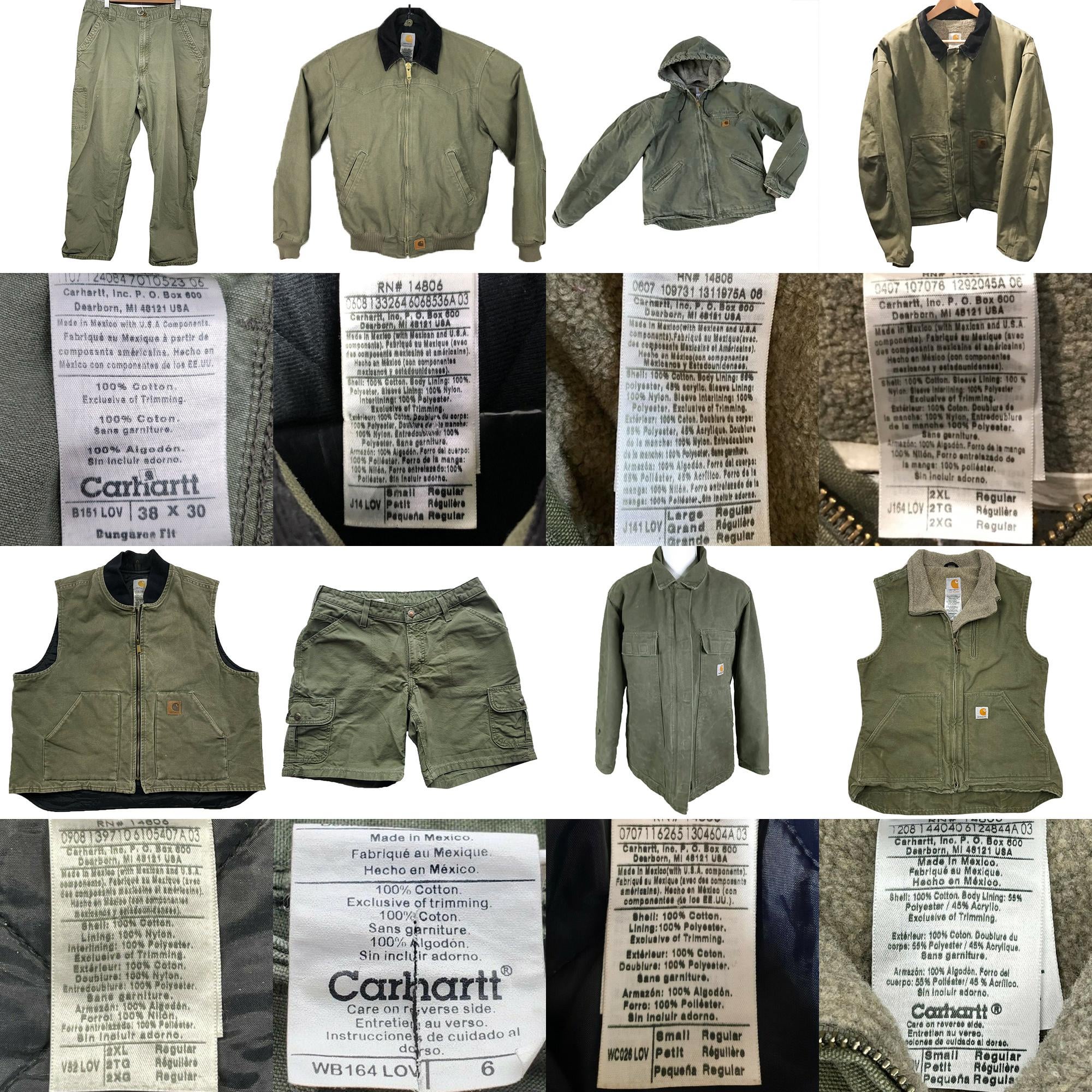
Light Olive — LOV. Mid-2000s, on the J14 Santa Fe, the J164 Dearborn, and several women's styles. (Photo: u/anthonydelillo, r/Carhartt)
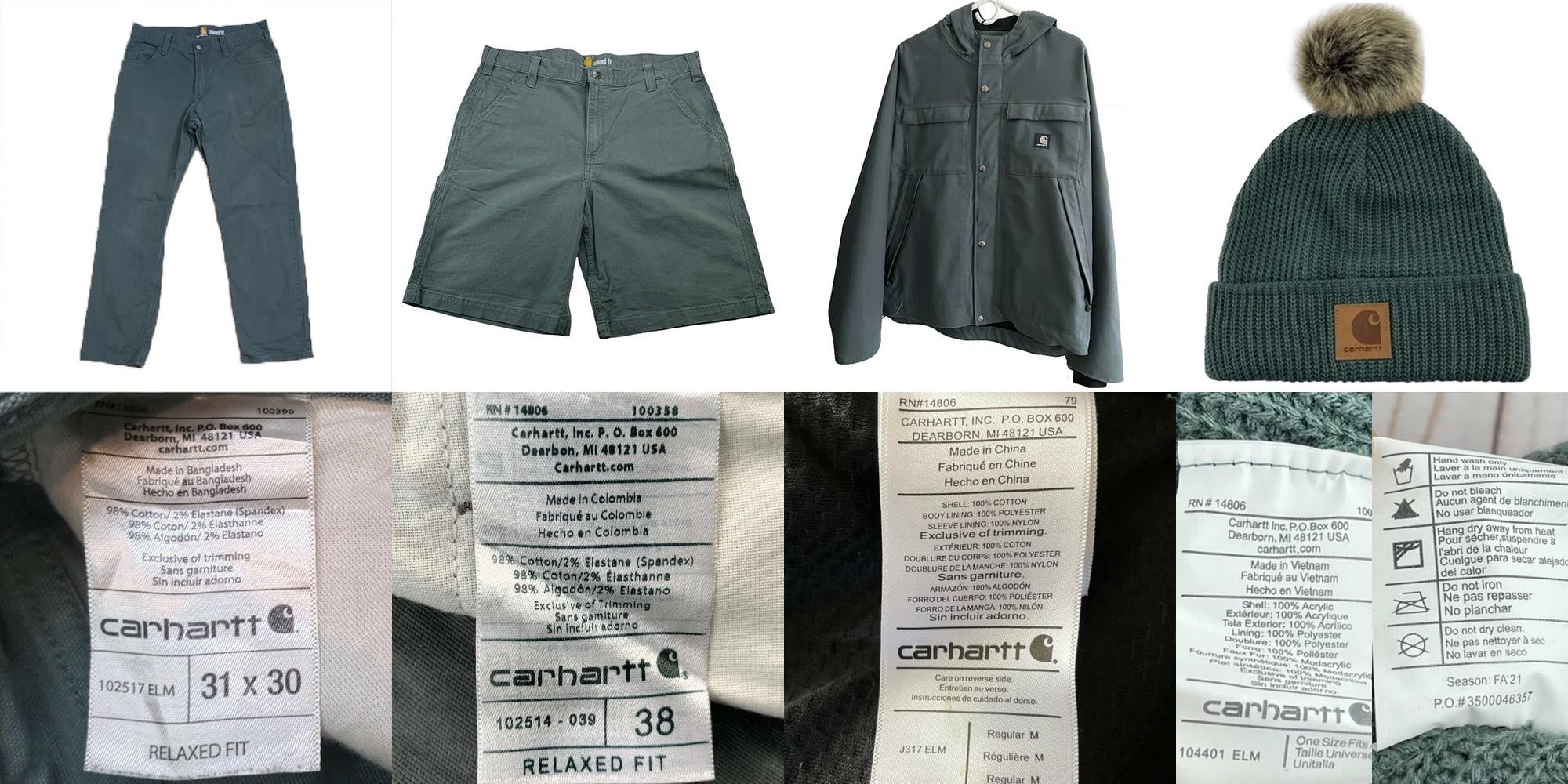
Elm — ELM, 305. A 2000s color that resurfaced in the late 2010s on beanies, pants, and the Rugged Flex line. (Photo: u/anthonydelillo, r/Carhartt)
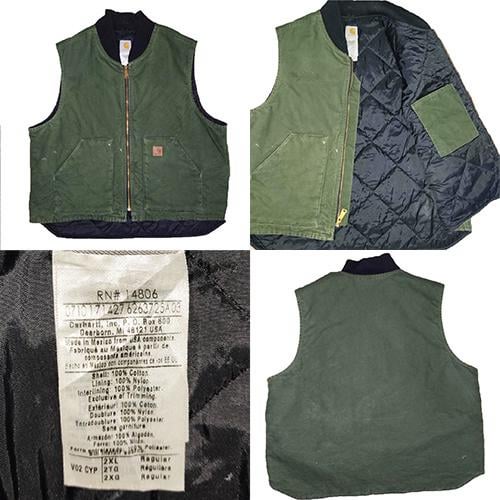
Cypress Green — CYP. Possibly the rarest green of all: introduced 2011, seemingly only ever on the V02 Sandstone Arctic Vest. (Photo: u/anthonydelillo, r/Carhartt)
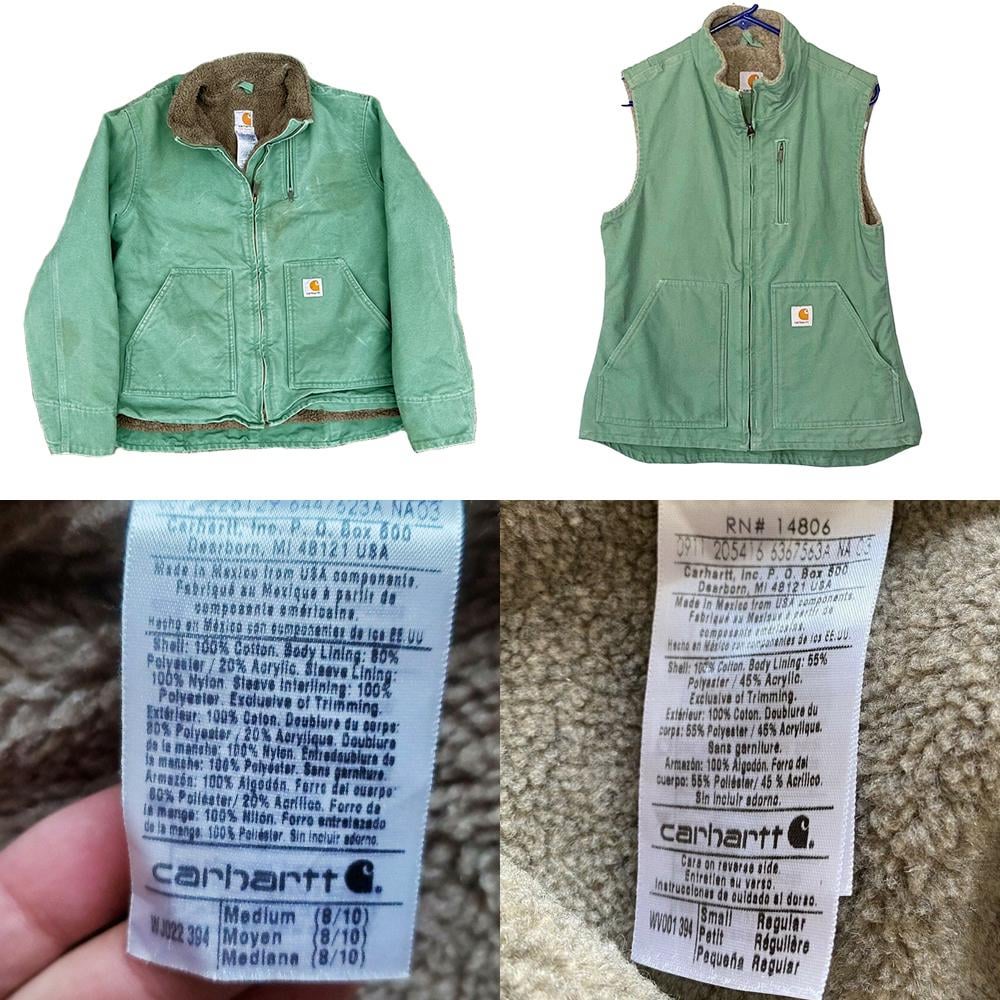
Tea Leaf — 394. A bright mint used in a handful of women's styles like the WV001 vest and WJ022 Canyon Jacket. (Photo: u/anthonydelillo, r/Carhartt)
WHY GREEN NERDERY MATTERS WHEN YOU SHOP
Knowing the greens turns "old green Carhartt jacket" into "Hunter Green Sandstone, so 1993–2000, matches the 43/HTG on the tag, priced accordingly." It's how we describe every piece honestly — and how you can check anyone else's claims, anywhere you shop.
Credit: the color research and photos are the work of u/anthonydelillo and the r/Carhartt community — the full greens deep-dive is at reddit.com/r/Carhartt/comments/tdje2o.
🇵🇭 Nationwide shipping 🌎 International shipping available